


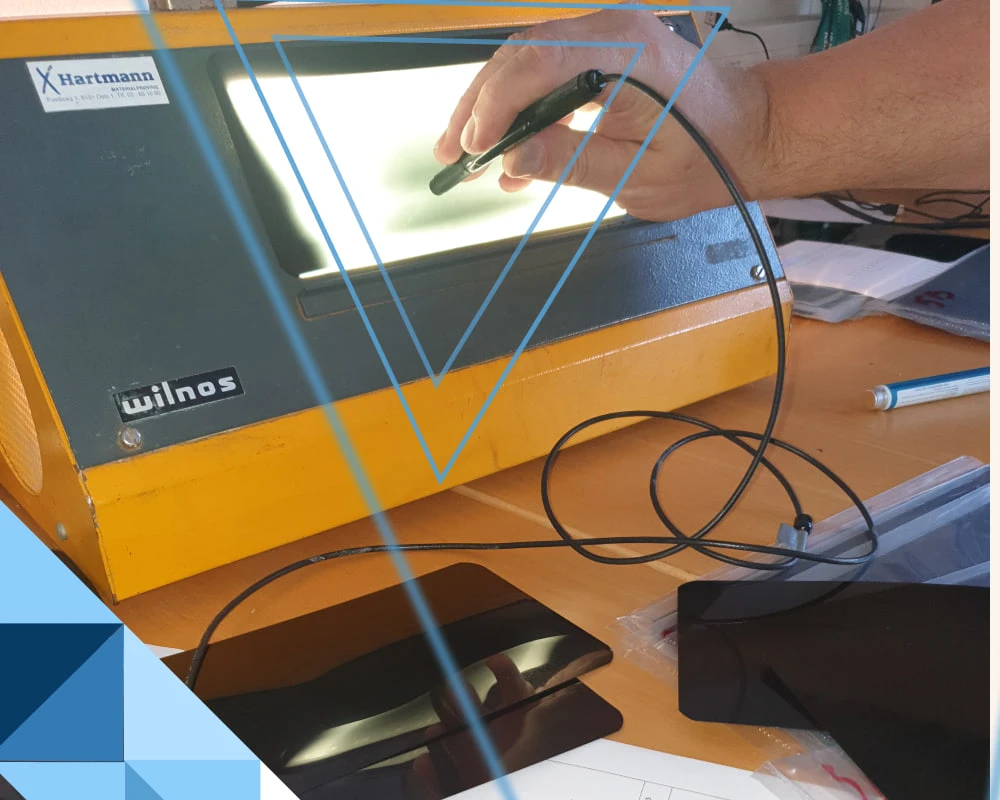
At High Technology Nondestructive Testing Service Co., Ltd, we provide Radiographic Testing (RT)—one of the most trusted and widely recognized volumetric inspection methods in the industry. By using X-rays or Gamma rays to penetrate the material, we produce a permanent film or digital record of the internal structure, allowing for the definitive detection of hidden defects.
Our Radiographic Inspection Capabilities
We offer a full range of RT services tailored to the specific density and thickness of your components:
-
X-Ray Radiography: Ideal for thinner materials and precision components, providing high-contrast images with excellent sensitivity.
-
Gamma Ray Radiography (Iridium-192 & Selenium-75): Highly portable and perfect for field inspections of pipelines, heavy-wall pressure vessels, and structural steel in remote locations.
-
Close Proximity Radiography: Utilizing specialized shielding to minimize exclusion zones, allowing for safer inspections in congested work environments.
Why Choose RT from HTNDT?
-
Permanent Documentation: The radiographic film provides a “physical footprint” of the weld quality, which is often a mandatory requirement for third-party auditors and government regulators.
-
Clear Defect Characterization: RT is exceptional at identifying volumetric flaws such as porosity, slag inclusions, hollow bead, and internal crowning.
-
Versatility: Effective on almost all material types, including carbon steel, stainless steel, and exotic alloys.
Safety & Technical Excellence
Safety is our absolute priority. Our RT operations are conducted with rigorous adherence to international radiation safety protocols:
-
Certified Personnel: All technicians are certified to ISO 9712 / ASNT Level II or III and are fully trained in radiation protection (RPO).
-
Code Compliance: Every exposure is performed in strict accordance with ASME Section V (Article 2), API 1104, AWS D1.1, and ISO 17636.
-
Quality Assurance: We use high-grade industrial film and calibrated densitometers to ensure that every radiograph meets the required density and sensitivity (IQI) standards.
